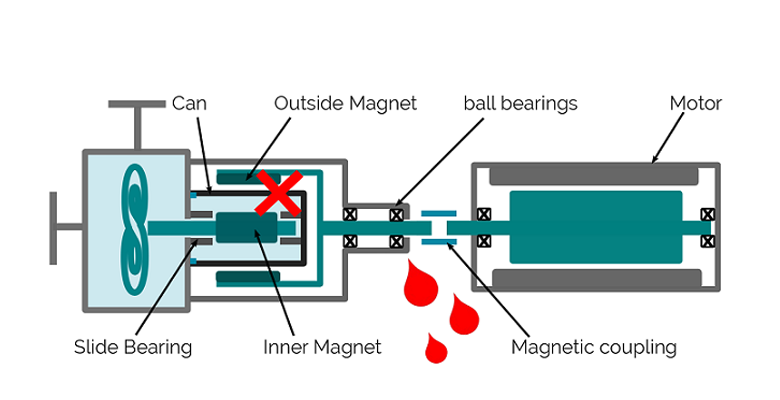
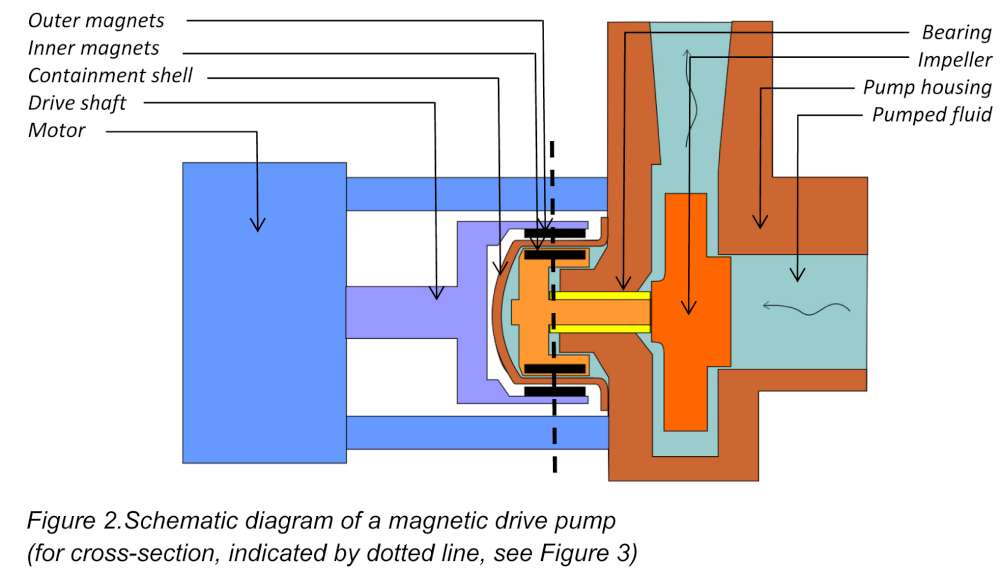
This article compares the two and leaves the final decision to the user as to which is better for his/her particular application. The motor turns the shaft and one set of magnetics, which generates a field to turn the second set, thus powering the impeller.

Mechanical Seal Vs Sealless Centrifugal Pumps Magnetic Drive
Canned motor pumps vs magnetic drive pumps standard mag drive pumps have no secondary containment, while secondary containment is standard in canned motor pumps.
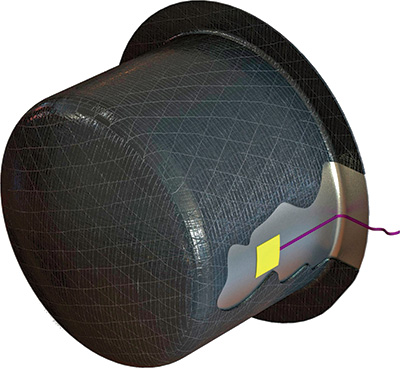
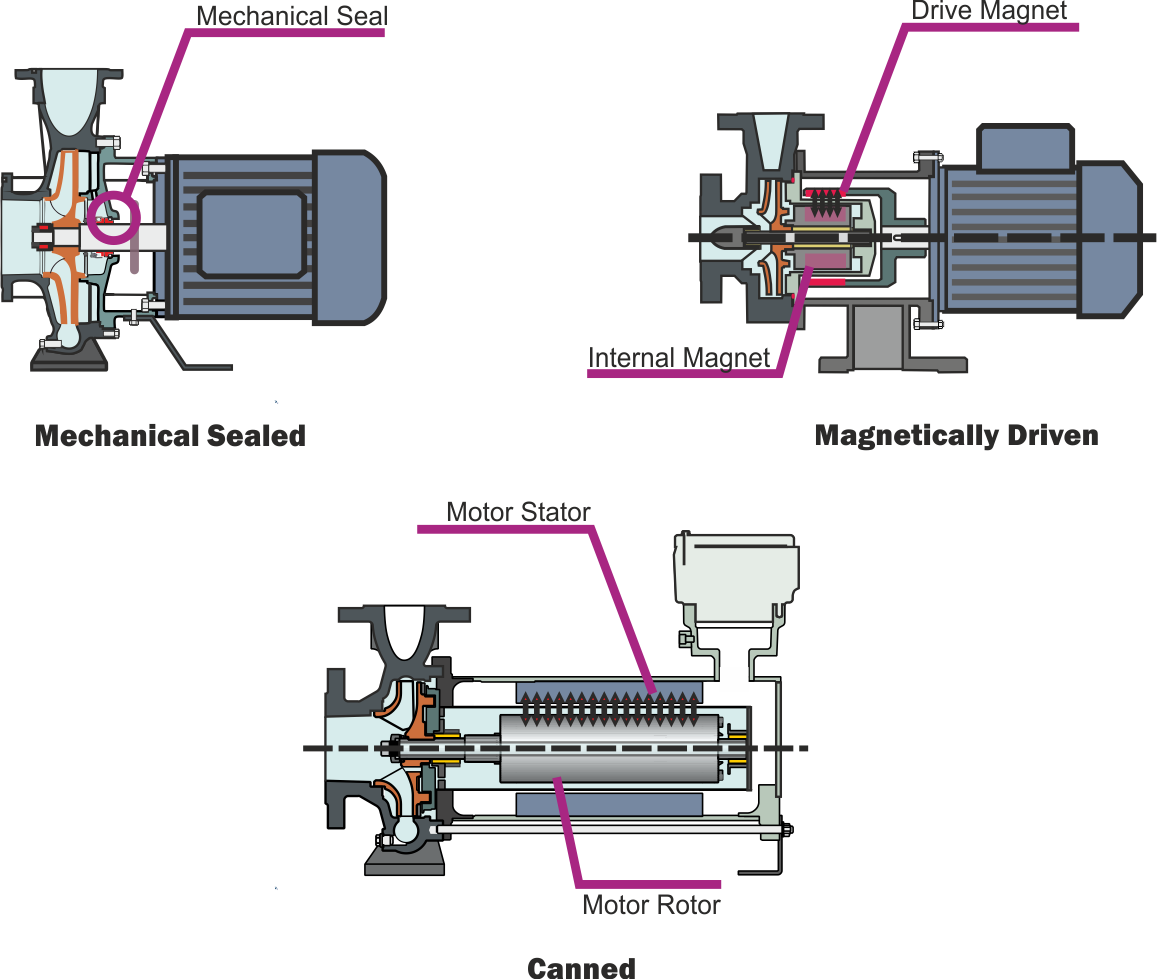
Magnetic drive pump vs canned motor. Bearings for magnetic drive pumps. Magnetic drive and canned motor pumps are two types of sealless pumps.the difference between them is how energy is transferred to the impeller. Sealless centrifugal pumps with magnetic drive have been around the industry for 70.
Magnetic drive pumps, in fact, can work only with clean liquids without solids in suspension. The environment is protected and safety is maintained as the. The magnets are separated by a containment shell which prevents the fluid from leaking outside the pump.
Because of this, the environment is protected and safety is maintained as the containment shell is not subject to damage by rotating parts like magnets. Compare to magnetic drive pumps. Secondary containment is standard in canned motor pumps.
Why buy mag drive pumps from axflow. Magnetic drive pump or canned motor pump? Standard mag drive pumps have no secondary containment.
But the canned motor design presents crucial advantages in most applications allowing a higher level of security and reliability. A sealless mag drive pump is a conventional centrifugal pump without the dynamic seal that would normally be used to seal the pump shaft. Metallic magnetic drive pumps have been used for even higher temperatures.
For this reason, the pump bases are much smaller, and installation is much easier. The canned motor pump is composed of a traditional centrifugal hydraulic, connected to a special motor through a one piece assembly. Protection for the motor against overlaod.
Magnetic drive pumps are usually more expensive than mechanical seal pumps. Canned motor pumps tend to be smaller, have fewer bearings and can be more efficient. A magnetic drive works on the principle of attraction and repulsion of two permanent magnets.
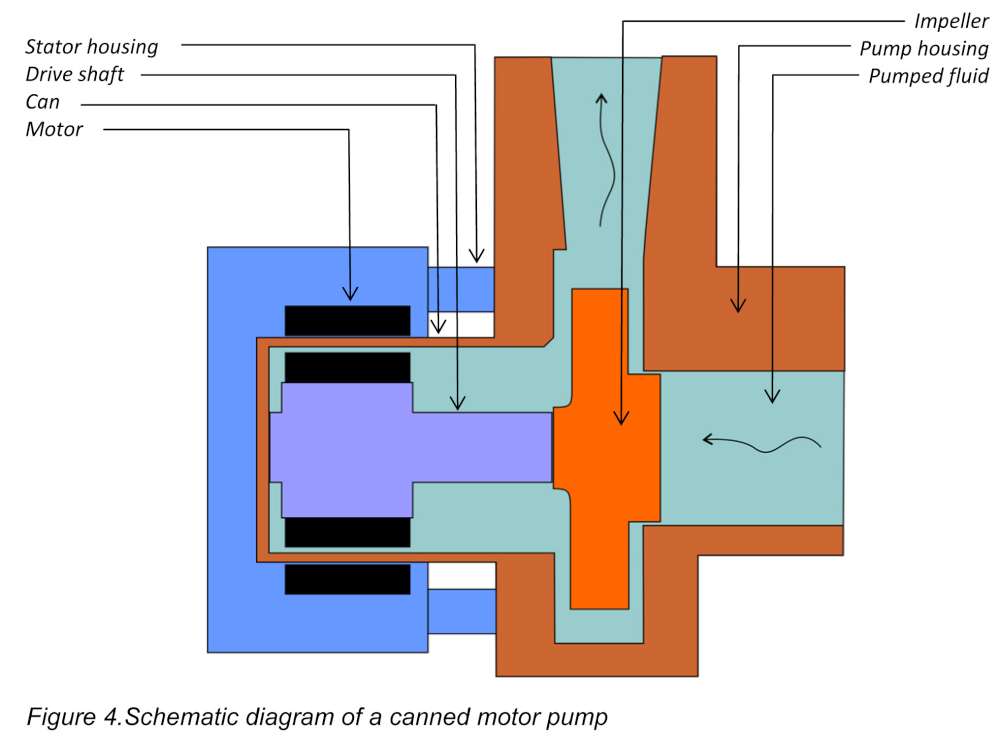
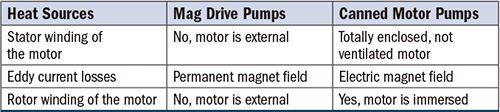
At the end of the motor shaft, a drive magnet is attached, and as the drive. In a canned motor pump, the motor’s rotor winding is encapsulated in a ‘can’ and it, and the entire drive shaft up to the impeller is immersed in the pumped fluid (figure 4). While for many api applications they are cheaper than mechanical sealed pumps with expensive seal support systems.
A perfect solution where environmental leaks are not tolerated. Canned motor pumps vs magnetic drive pumps. In direct drive pumps, the impeller of the pump is attached to the shaft of the motor, and this design depends on the shaft seal to contain the chemical.
In a magnetic drive pump, the wet end and motor are two separate contained parts, connected by only a motor bracket. This means that there is no direct or indirect path through which any fluids or gases can escape which can pose a risk to both operators and the environment. Axflow has an extremely large number of magentically drien pumps as we represent fseveral different manurfactuers of magnetic drive and canned pumps in the uk.
Because a magnetic drive pump is an enclosed piece of equipment, lubrication oil or grease cannot be used for bearings. Advantages of teikoku & chempump canned motor pumps. Fortunately, the heat transmission into the pumping medium is significantly lower compared to canned motor pumps, meaning you don’t run the risk of unintentionally heating your media.
The pump liquid circulates through the rotor chamber, cooling the motor, and lubricating the slide bearings that support the rotor.the casing of the chamber forms a sealless enclosure. There is no bearing monitoring for the motors or pump power frame and no lubrication issues. A canned motor is an electric motor in which the rotor winding is encapsulated and is immersed in liquid.
There are no alignment issues since the motor and pump shaft are one. A canned motor pump (cmp) (see figure 2) is a type of sealless pump that combines a centrifugal pump and induction motor into one hermetically sealed unit. Magnetic drive pumps are sealless centrifugal pumps that use internal and external magnets to transmit torque from the motor to the impeller.
Amongst the totally leak proof pumps, the canned motor technology completes the “magnetic drive” technology. Reduced heat transfer from the motor into the pump chamber. The connection between the motor drive and the pump drive is made via a magnetic connection which works through the isolation shroud.
About press copyright contact us creators advertise developers terms privacy policy & safety how youtube works test new features press copyright contact us creators. The stator is canned in the air gap, confining the liquid in the rotor chamber. This dynamic seal is replaced by a static containment shell to form a completely sealed liquid end or pressure boundary.
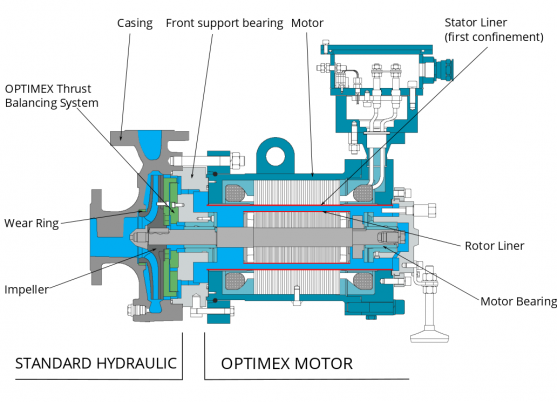
Canned Motor Pump Technology Principle Sealless Industrial Pump Manufacturing

Advantages Of Canned Mag Drive Pumps Over Mechanical Sealed Pumps

Canned Motor Pumps Vs Magnetic Drive Pumps Teikoku Usa Inc

Principles Of Magnetic Drive Pumps - Youtube
Useful Information On Magnetic Drive Pumps

Canned Vs Magdrive 2016 - Youtube
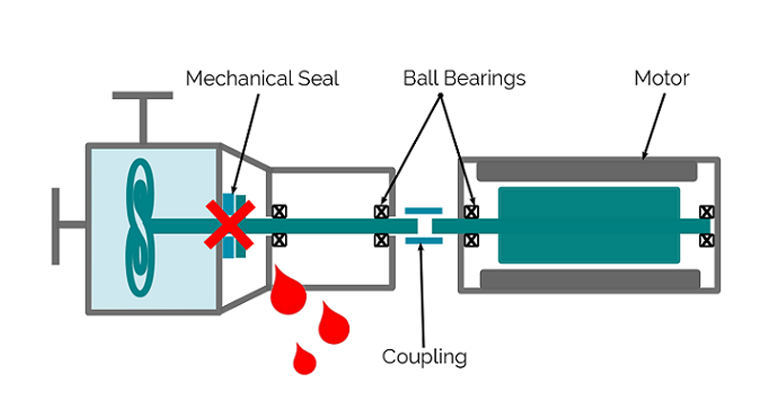
Centrifugal Pumps Technologies Magnetic Drive Canned Motor Mechanical Seal
Magnetic Drive Pumps Versus Canned Motor Pumps Pumps Systems

Hermetic Canned Motor Pump En - Youtube

Advantages Of Canned Mag Drive Pumps Over Mechanical Sealed Pumps
Centrifugal Pumps Technologies Magnetic Drive Canned Motor Mechanical Seal
Useful Information On Magnetic Drive Pumps

Advantages Of Canned Mag Drive Pumps Over Mechanical Sealed Pumps
Mag Drive Canned Pump Advantages Axflow

Canned Motor Pump And Typical Start-up Procedure - Enggcyclopedia
Magnetic Drive Pumps Versus Canned Motor Pumps Pumps Systems
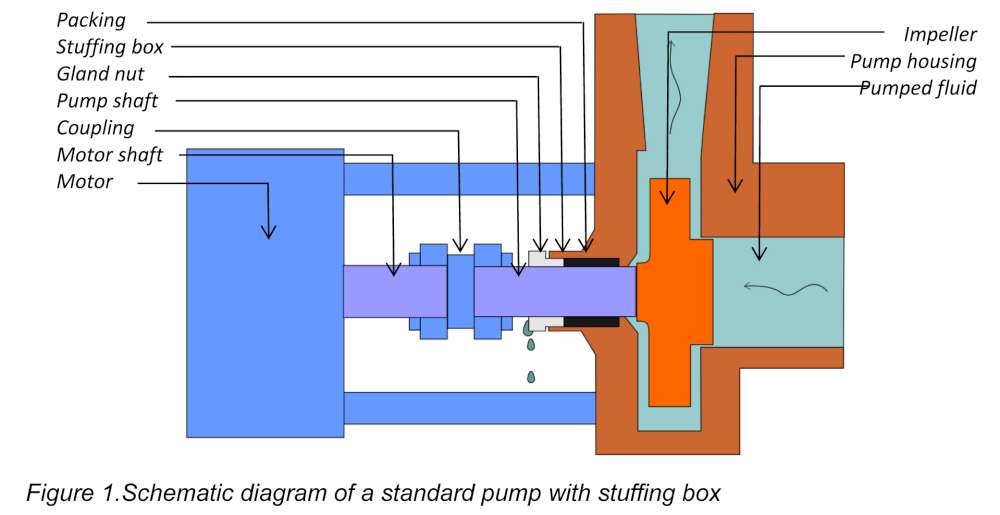
Useful Information On Magnetic Drive Pumps

Emissions Free Teikoku Usa Inc
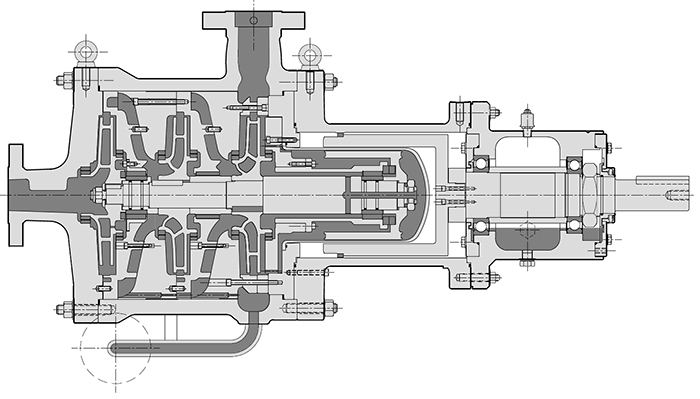
Canned Motor Pumps Magnetic Couplings Sealless Rotodynamic Pumps Pumps Systems
Comments
Post a Comment